Highlights:
-
Replace Natural Lawns with Resilient Alternatives: Swap traditional grass for pet-grade synthetic turf, micro-clover, or hardscapes like flagstone and pavers to eliminate muddy paws, digging, and lawn repair.
-
Leverage Hardscaping for Easy Upkeep: Incorporate stone, concrete slabs, and composite decking to create clean living areas that handle heavy traffic and clean up effortlessly with a quick hose-down.
-
Protect Vegetation with Raised Beds and Boulders: Use elevated planters, retaining walls, and strategic rock placement to keep fragile flowers and roots safely out of reach from active animals.
-
Design for Natural Pet Instincts: Incorporate dedicated zones—such as fence-line patrol paths, shade retreats, sniffing areas, and digging pits—to channel pet energy away from delicate garden features.
-
Select Non-Toxic, Low-Maintenance Plants: Opt for hardy, pet-safe vegetation like lavender, succulents, and drought-tolerant perennials that thrive with minimal watering, fertilizing, or pruning.
-
Utilize Smart Storage and Built-In Elements: Use integrated bench seating with hidden storage compartments to keep pet toys, tools, and outdoor gear organized and out of sight.
Creating a backyard that accommodates energetic pets without sacrificing style or spending every weekend on maintenance can feel like an uphill battle. Traditional manicured lawns require endless mowing, fertilizing, and weeding, only to end up damaged by muddy paws, digging, or pet waste. Fortunately, you do not have to choose between a gorgeous outdoor retreat and a space your animals love.
By selecting resilient materials, intelligent layouts, and durable vegetation, you can create a stunning outdoor living space that thrives with minimal effort. Here are seven stylish, low-maintenance, and pet-safe backyard design ideas to inspire your next outdoor renovation.
The Synthetic Turf Sanctuary
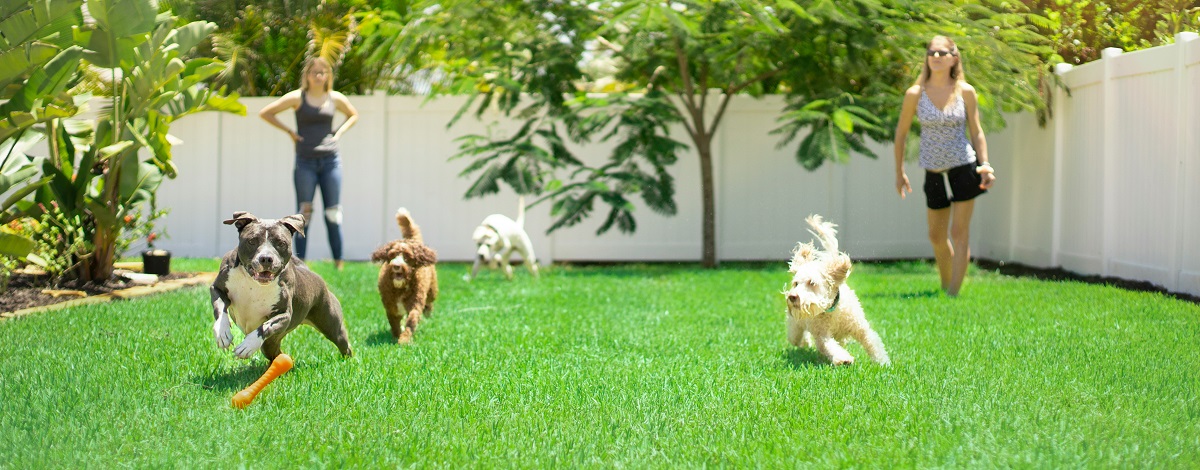
Traditional turf grass is notoriously difficult to maintain when you have pets. Heavy traffic creates ugly dirt tracks, and liquid waste leaves yellow patches that ruin an otherwise pristine landscape. Artificial grass provides a lush, vibrant green appearance year-round without the need for endless mowing, watering, or chemical fertilizers. Modern synthetic turf is engineered specifically for pets, featuring antimicrobial infill to neutralize odors, advanced multi-directional drainage systems, and durable backing that resists persistent pulling and digging.
Pairing synthetic turf with hardscape borders like modern concrete pavers, dark slate, or polished river rock creates a crisp, contemporary aesthetic. It eliminates mud entirely, meaning no more tracking dirt into your home after a rainy afternoon or cleaning muddy paws at the back door. Routine upkeep requires remarkably little effort compared to organic lawns:
-
Routine rinsing: Spray down high-traffic pet areas once a week with a standard garden hose to flush out dust and liquid waste.
-
Periodic brushing: Use a synthetic-bristle broom once a month to brush against the grain, keeping the blades standing upright in heavy-use zones.
-
Debris removal: Blow off fallen leaves or twig buildup using a leaf blower to prevent organic matter from decomposing on the turf surface.
Beyond its practical benefits, synthetic turf gives you the freedom to design custom shapes that fit your specific yard layout. You can create geometric lawn pads separated by concrete stepping stones, or curve the turf around focal points like fire pits and outdoor dining sets. The end result is a polished, tailored yard that looks impeccably manicured through every season without forcing you to pull out the lawnmower.
The Xeriscaped Oasis
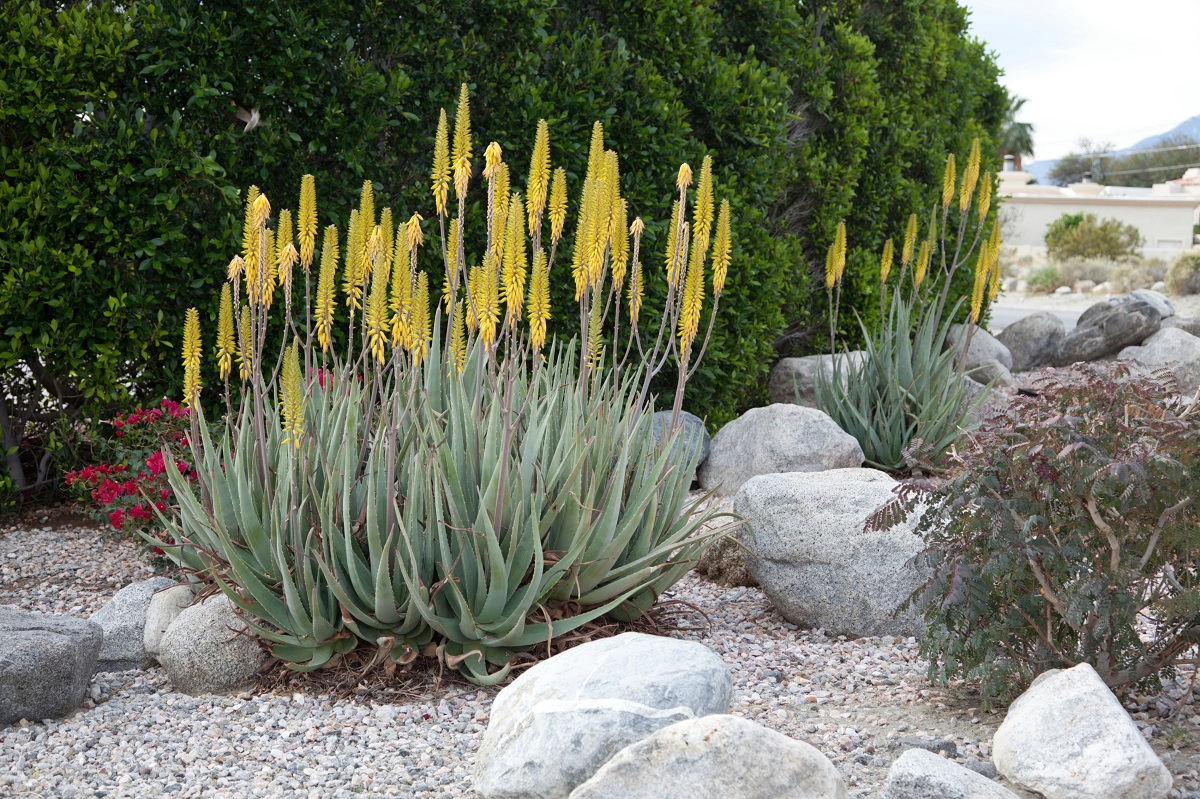
Xeriscaping focuses on landscaping with drought-tolerant plants, raw natural elements, and structural hardscapes to drastically minimize water usage and ongoing upkeep. This design approach is naturally low maintenance and exceptionally resilient against pet activity because it completely eliminates fragile, high-maintenance turf grass. Instead, the ground is covered using a thoughtful mix of pea gravel, decomposed granite, crushed stone, and slate pathways to define functional zones throughout the space.
Incorporate pet-safe succulents, ornamental grasses, and native perennials that require little pruning, zero synthetic fertilizers, and minimal irrigation once established. When setting up your plant beds, aim for balancing beauty and function in landscaping by grouping hardier shrubs along the perimeter to protect delicate flowers from enthusiastic dogs.
-
Structural boulders: Position large, smooth boulders along corner edges to act as natural deterrents that keep pets from cutting through vulnerable plant beds.
-
Decomposed granite tracks: Lay down compacted granite paths that handle heavy running without creating dust clouds or kicked-up rocks.
-
Native succulent borders: Use thick-leaved, thornless succulents like blue chalksticks or hens-and-chicks that tolerate occasional bumps without snapping.
To add depth to a xeriscaped yard, layer materials with contrasting colors and textures. Combine light beige gravel with dark granite stepping stones, and anchor the corners with weathered driftwood or large accent rocks. These natural elements serve as visual landmarks for the human eye while double-functioning as sturdy, claw-proof boundaries that guide your animals naturally around the yard.
The Hardscape and Paver Patio Retreat
Maximizing hardscaping is one of the most effective ways to reduce outdoor chores while elevating your yard’s aesthetic. High-quality materials like flagstone, slate, bluestone, or interlocking concrete pavers create clean, elegant living spaces that hold up against heavy foot and paw traffic year after year. Hardscape surfaces are incredibly easy to sweep, power wash, or hose down, making pet cleanup quick, hygienic, and completely effortless.
To soften the look of extensive stone or concrete, integrate built-in planter boxes filled with non-toxic perennials like lavender, rosemary, thyme, or marigolds. Raised planters keep fragile roots safely out of reach from curious diggers while adding vertical structure, rich fragrance, and pops of color to your outdoor living area.
-
Flagstone and mortar: Install stones sealed with a smooth joint filler to prevent paws from getting caught and weeds from popping up between cracks.
-
Permeable pavers: Use porous stone options that allow rainwater to drain directly into the ground underneath, preventing standing puddles after heavy storms.
-
Built-in stone benches: Construct integrated seating along the patio perimeter that doubles as a barrier against off-limit garden zones.
By prioritizing hardscape features, you transform your backyard into an outdoor living room extension of your home. You can easily furnish the patio with stylish all-weather sectional sofas, dining tables, and ambient string lights without worrying about pets tracking mud onto outdoor cushions. The solid surface provides a cool, flat lounging spot for animals to stretch out on sunny days while ensuring your landscape stays immaculate with virtually no lawncare equipment required.
The Natural Wood Bark and Clover Haven
If you prefer a softer, more traditional green look without the constant hassle of a classic lawn, consider a combination of wood bark mulch and Dutch white clover. Micro-clover is a resilient ground cover that requires far less water and mowing than traditional turf grass. It stays green throughout the hot summer months, naturally suppresses weeds, fixes its own nitrogen in the soil, and does not discolor or burn when exposed to pet waste.
For designated play zones or areas surrounding trees and shrubs, engineered wood fiber or cedar bark mulch offers a soft, safe, and visually grounding foundation. Cedar mulch has natural insect-repelling properties that deter fleas and ticks, and it decomposes slowly, requiring minimal replenishment over time. Avoid cocoa bean mulch, which contains toxic compounds similar to chocolate that are dangerous to dogs, and opt for natural, untreated wood products instead.
-
Clover ground cover: Sow micro-clover across open areas to create a soft, self-sustaining green carpet that thrives in poor soil and tolerates heavy paw traffic.
-
Cedar bark beds: Spread thick layers of cedar bark around tree bases and border beds to suppress weed growth and provide a natural pest-repellent cushion.
-
River rock borders: Frame mulch zones with heavy river rocks to keep bark contained when dogs zoom through the yard.
This hybrid approach balances organic textures with effortless maintenance. The clover handles heavy running without turning into a patch of bare dirt, and the wood bark provides a soft landing zone for jumping or playing fetch. It delivers a serene, natural woodland aesthetic that blends seamlessly into suburban or rural environments, providing a soft surface for your pets to lounge on without demanding your weekends be spent fertilizing or re-seeding.
The Zoned Sensory Garden
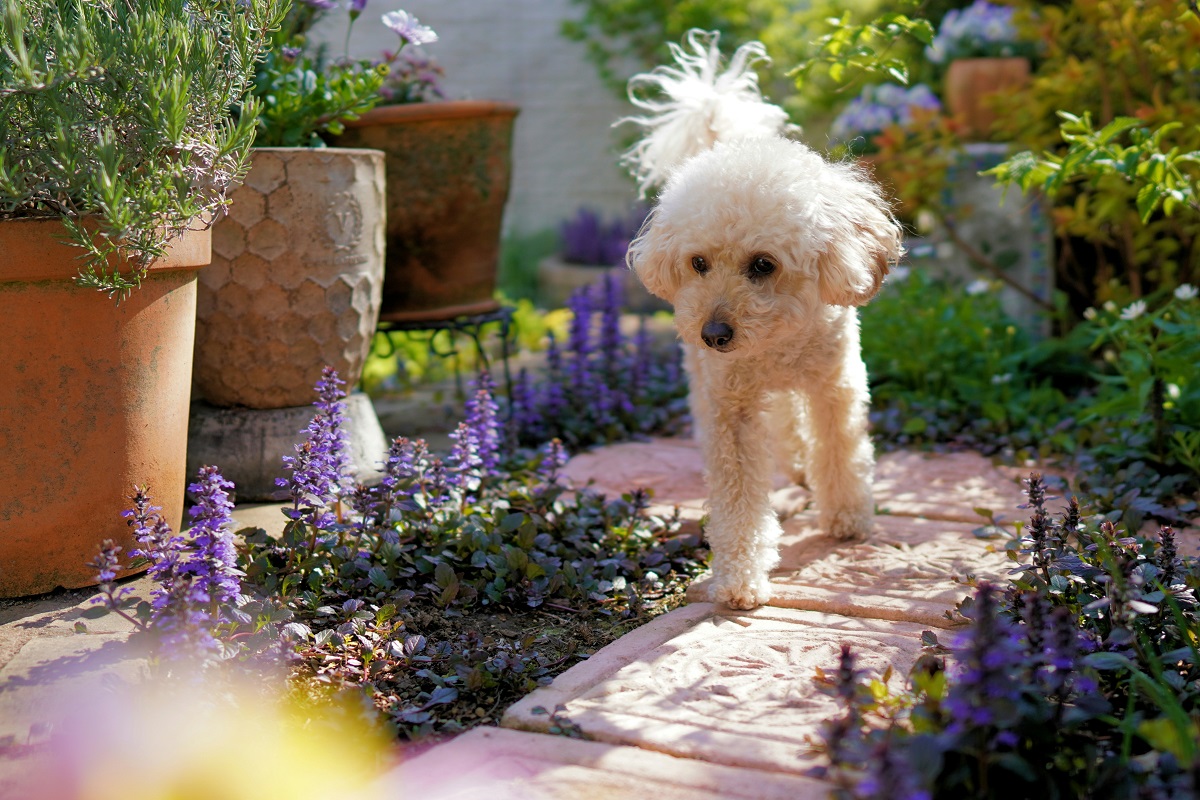
Pets thrive when their environment provides mental stimulation, and zoning your yard allows you to cater to their natural instincts while maintaining a tidy, organized layout. A sensory garden design incorporates different ground textures, gentle pet-safe scents, and structured pathways for animals to explore safely without destroying your prize plants.
Design designated zones using distinct materials like smooth river rocks, pea gravel paths, and low turf zones. When designing a safe outdoor area for pets, incorporate broad, clear sightlines so you can monitor your animals from inside the house.
-
Exploration paths: Create winding stone or gravel paths directly along fence lines where dogs naturally like to patrol and guard their territory.
-
Sniffing zones: Plant dog-safe herbs like basil, mint, catmint, and chamomile in raised borders where pets can safely interact with pleasant, calming scents.
-
Shade retreats: Install covered pergolas, sail shades, or deep overhangs over cool concrete slabs to keep your pets safe from overheating during hot summer afternoons.
-
Dedicated digging pit: Build a small, framed sandbox filled with clean play sand in an out-of-the-way corner to redirect natural digging urges away from your plant beds.
Zoning prevents your entire yard from becoming a free-for-all play area by establishing intentional boundaries. By giving pets clear paths to walk and specific areas tailored to their curiosity, they are far less likely to forge their own trails through your landscape beds. The result is a harmonious, beautifully architected yard where human relaxation areas and pet play zones co-exist cleanly side by side.
The Raised Bed Cottage Garden
Cottage-style gardens are celebrated for their relaxed, lush, and slightly wild feel, making them ideal for hiding minor landscape imperfections. By elevating your flower and vegetable beds with stone walls, stacked brick, or thick cedar timbers, you effectively protect your plants from being trampled, chewed, or dug up by active pets.
Keep the ground surfaces between raised beds simple with compacted decomposed granite, pea gravel, or large flagstone steppers. Fill the elevated beds with hardy, non-toxic plants that thrive with minimal attention:
-
Snapdragons and Sunflowers: Tall, sturdy annuals and perennials that add vibrant height and structural interest without fragile stems.
-
Coreopsis and Echinacea: Drought-tolerant perennials that attract butterflies and pollinators while remaining completely harmless to curious pets.
-
Boston Ferns and Hostas: Shade-loving foliage plants that add rich green textures and lush volume to darker corners of the garden.
-
Rosemary and Lavender: Woody, aromatic shrubs that resist pet nibbling and release pleasant fragrances whenever brushed past.
Raised beds also make gardening significantly easier on your back, eliminating the need to bend down or kneel on the ground for weeding and harvesting. The raised walls act as built-in physical barriers that clearly define where the lawn ends and the garden begins. Pets quickly learn to navigate around the perimeter of the beds rather than charging through them, keeping your floral displays pristine and fully intact.
The Modern Minimalist Courtyard
Minimalist courtyard designs rely on clean lines, high-end hardscaping materials, and limited, intentional plant palettes to achieve a sophisticated, high-end look. By replacing wide open lawn spaces with smooth concrete slabs, composite decking, and strategic gravel beds, ongoing maintenance is reduced to occasional sweeping or light power washing.
Incorporate sleek, built-in bench seating along outer walls or fences to save valuable floor space and eliminate the clutter of extra patio furniture. Built-in benches can also double as hidden storage boxes for pet toys, garden hoses, and outdoor supplies, keeping the courtyard clean, wide open, and easy to navigate.
-
Composite decking: Choose scratch-resistant, non-porous composite wood that withstands dog claws, resists moisture, and never needs sanding or staining.
-
Architectural concrete pads: Lay large-format square concrete pads separated by thin strips of black basalt rock for a striking geometric layout.
-
Potted specimen plants: Use heavy ceramic or concrete pots to house accent trees like Japanese Maples or bamboo, keeping root systems safely contained.
The minimalist approach creates a tranquil, uncluttered sanctuary that feels larger than it is. Because every element is chosen for its durability and clean form, there are no delicate features for pets to ruin. The layout allows for easy monitoring, effortless cleaning, and a polished contemporary appearance that stays picture-perfect year-round with virtually zero effort.
Final Thoughts
Achieving a beautiful outdoor environment does not require hours of weekly yard work or constant repairs from pet damage. By choosing durable materials like synthetic turf, hardscape pavers, and non-toxic native plants, you can construct a functional yard that accommodates your pets while staying clean and stylish. Embracing smart layouts and low-maintenance ground covers lets you spend less time working on your yard and more time enjoying it with your favorite companions.