A secure and functional home exterior should do more than look attractive from the street. It should support everyday routines, protect important access points, accommodate vehicles, and make the property easier to maintain. Driveways, gates, garages, fencing, siding, lighting, and security equipment all contribute to how well the exterior works as a whole. When these elements are planned separately, homeowners can end up with inconvenient layouts, mismatched materials, or upgrades that interfere with future projects.
A better approach is to look at the property as a connected system. Vehicle access should align with garage placement, fencing should support both privacy and movement, and exterior materials should withstand local weather conditions. Security improvements should cover vulnerable areas without making the property difficult to use. Homeowners should also consider how future needs may change, especially if they plan to add vehicles, outdoor storage, recreational spaces, or new technology. By coordinating exterior improvements carefully, it is possible to create a property that feels more organized, secure, durable, and convenient throughout the year.
Plan Vehicle Access Before Making Major Changes
The driveway is often the first functional part of a property that homeowners and visitors use. Its width, condition, slope, and connection to the garage can influence everything from parking convenience to drainage. Before resurfacing or replacing a driveway, homeowners should evaluate how vehicles currently enter, turn, park, and exit the property.
Driveway paving contractors can help assess surface deterioration, grading problems, and areas that may need a stronger base. Cracks, depressions, and crumbling edges can make a driveway less comfortable to use and may allow water to reach underlying materials. Correcting drainage during paving work can be especially important near garages, walkways, and foundations.
Homeowners choosing between asphalt and a concrete driveway should consider maintenance expectations, climate, appearance, and how heavily the surface will be used. Concrete may offer a clean, structured appearance and can be finished in different textures, while asphalt has different installation and maintenance needs. The best choice depends on the site rather than appearance alone.
Access planning should also consider delivery vehicles, trailers, guests, and emergency access. A driveway that works for one compact vehicle may become inconvenient when multiple cars need to maneuver. Thinking about circulation before construction begins can prevent expensive changes later and help the rest of the exterior layout function more smoothly.
Protect Driveway Surfaces With Routine Maintenance
A newly installed driveway still requires attention after construction is complete. Sunlight, moisture, vehicle traffic, deicing materials, and temperature changes can gradually affect exterior surfaces. Routine inspections can help homeowners identify cracks, stains, drainage issues, and edge damage before they become more extensive.
For asphalt surfaces, sealcoating services may be part of a broader maintenance plan. Sealcoating can provide a protective surface layer, but it should not be treated as a substitute for repairing structural problems. Cracks, potholes, drainage failures, or unstable areas should be evaluated first so cosmetic work does not simply cover a developing issue.
Cleaning also matters. Oil, leaves, dirt, and other debris can collect in low areas or along driveway edges. Keeping the surface clear makes changes easier to spot and may reduce staining. Drainage channels and nearby gutters should remain unobstructed so water moves away from the driveway rather than pooling.
Homeowners should also protect driveway edges from unnecessary stress. Heavy vehicles repeatedly driving over unsupported edges may cause deterioration, particularly when the base has shifted. Landscaping and soil should be kept at appropriate levels so water does not become trapped against the pavement. A simple seasonal inspection can help homeowners decide when minor maintenance is enough and when professional evaluation may be needed.
Improve Garage Access and Daily Function
The garage is one of the most frequently used exterior access points in many homes. A door that operates smoothly can make daily routines easier, while a damaged or poorly fitted system can create inconvenience and security concerns. Homeowners should consider both mechanical performance and how the door fits the overall exterior.
A new garage door installation may be appropriate when an existing door is heavily damaged, outdated, poorly insulated, or no longer compatible with the way the garage is used. Door materials, window placement, insulation, hardware, and opener systems can all affect performance. The surrounding trim and siding should also be considered so the finished installation looks integrated with the home.
Not every issue requires full replacement. Emergency garage door repairs may be necessary when a door becomes stuck, comes off its track, has damaged cables, or cannot be secured. Because garage doors include heavy moving components and parts under tension, some repairs are better left to trained professionals rather than handled as a do-it-yourself project.
Homeowners can support reliable operation by keeping tracks clear, watching for uneven movement, testing safety features, and paying attention to unusual noises. Small changes in operation may indicate developing wear. Addressing them early can help prevent a minor problem from disrupting one of the household’s primary entry points.
Consider Whether the Garage Still Fits Your Needs
Garages often evolve along with a household. A space originally used for one vehicle may eventually need to accommodate multiple cars, tools, recreational equipment, hobbies, or additional storage. When the existing structure no longer supports those needs, homeowners may want to consider a more substantial exterior project.
Custom garages can be designed around the property rather than forcing the household to work within a standard layout. Design considerations may include vehicle size, door placement, ceiling height, work areas, storage, electrical access, ventilation, and connections to nearby driveways or walkways. A detached garage may serve different needs than one connected directly to the house.
Storage should be planned from the beginning rather than added wherever space remains. Wall systems, cabinets, overhead racks, and dedicated zones can keep tools and equipment away from vehicles and walking paths. Homeowners may also want space for bicycles, lawn equipment, seasonal items, or charging equipment.
Exterior appearance matters as well. Roofing, siding, trim, windows, and door styles can help a new garage complement the home instead of looking like an unrelated addition. The location should also preserve reasonable yard space and support safe vehicle movement. Planning the building and surrounding access together helps create a garage that improves the property’s function without creating new circulation problems.
Strengthen Gates and Property Boundaries
Fencing and gates can provide privacy, define property lines, manage pets, and help control how people enter a property. Their placement should reflect how the yard, driveway, and garage are actually used. A fence that creates an awkward turn or blocks useful access can reduce convenience even if it improves privacy.
Local fence companies can help homeowners compare materials, heights, gate styles, and layouts suited to different parts of a property. Some households may prefer solid fencing around private areas and more open styles near the front yard. Gate width should allow the vehicles, equipment, or service access that the property regularly requires.
For homes with gated driveways, motorized gate installations can make entry and exit more convenient while helping control access. The gate should be positioned so vehicles can safely wait without blocking traffic or creating difficult turns. Homeowners should also consider backup operation, sensors, maintenance access, and how the gate will function during power interruptions.
Fences and gates require ongoing inspection. Posts can shift, hinges can loosen, latches can wear, and vegetation can interfere with movement. Motorized systems may need periodic adjustment or service. Keeping these components in working condition is important because a damaged gate can create both access and security problems at the same time.
Add Security Without Making the Property Difficult to Use
Exterior security works best when it supports normal household routines rather than creating unnecessary inconvenience. Good visibility, functional locks, clear pathways, sturdy gates, and strategic lighting can all contribute to a more secure exterior. Technology can add another layer when it is installed thoughtfully.
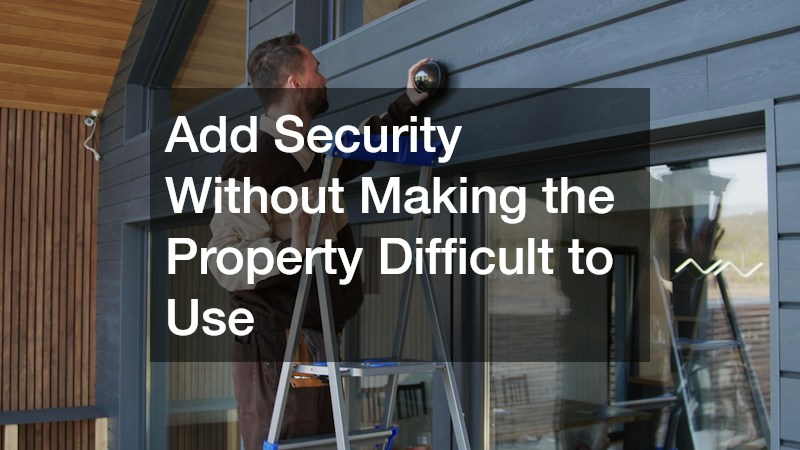
House security camera installation can help homeowners monitor entrances, driveways, garages, gates, and other areas where people approach the property. Camera placement should focus on useful views rather than simply installing as many devices as possible. Entrances and access routes are often more valuable to monitor than isolated areas with little activity.
Lighting can improve camera visibility while also making walkways and entrances easier to navigate after dark. Fixtures should be positioned to reduce deep shadows without creating excessive glare. Motion-activated lights may be useful near garages, side entrances, or less frequently used areas.
Homeowners should also think about practical issues such as power, network connectivity, storage, weather resistance, and maintenance access. Cameras mounted too high or in difficult locations may be harder to clean, adjust, or replace. Landscaping should not block important views as plants mature.
Physical security remains important even with cameras in place. Doors, windows, gates, and garage access points should close and lock properly. Security works most effectively when technology supports strong everyday habits rather than replacing them.
Maintain Siding and Other Exterior Surfaces
Siding is a major protective layer between the home and the elements, but it is easy to overlook until visible damage appears. Cracked panels, loose sections, failed caulk, moisture stains, or impact damage can affect both appearance and performance. Regular exterior inspections can help homeowners notice these issues earlier.
A siding service can evaluate damaged areas and determine whether localized repair or broader replacement is appropriate. Maintenance needs depend on the material. Vinyl, fiber cement, wood, metal, and other products respond differently to moisture, sunlight, temperature changes, and impact.
Homeowners should pay particular attention to siding near garages, driveways, hose connections, roof edges, and landscaping. These areas may experience splashback, equipment contact, or concentrated water exposure. Gutters and downspouts should move water away from walls, while shrubs should be trimmed so they do not hold moisture against siding.
Exterior trim, soffits, fascia, flashing, and caulk should be inspected at the same time. A problem in one component may allow water to reach materials behind another. Coordinating repairs can help homeowners avoid repeatedly opening the same area.
Cleaning methods should also match the material. Excessive pressure or harsh products may damage finishes. Routine care, proper drainage, and prompt repairs can help exterior surfaces continue supporting both the appearance and protection of the home.

Coordinate Exterior Projects for Better Long-Term Results
Exterior upgrades are easier to manage when homeowners think about project order before hiring contractors or purchasing materials. Some improvements require heavy equipment or open access to areas that later projects may close off. Completing work in the wrong sequence can result in damage, delays, or unnecessary duplication.
For example, major driveway work may be easier to complete before installing a permanent motorized gate. A new garage may need to be built before final paving so elevations and access points can be coordinated. Fence installation may need to wait until excavation, siding work, or utility access is complete. Security equipment is often best installed after construction dust and major exterior changes are finished.
Homeowners should create a list of immediate problems, desired improvements, and future projects. Safety and structural concerns usually deserve priority over cosmetic changes. Budgeting can then account for how one project affects another instead of treating each expense as completely separate.
It can also help to keep records of materials, warranties, paint colors, equipment models, contractor information, and maintenance dates. These details make future repairs easier and reduce guesswork when replacement parts or matching materials are needed.
Before work begins, homeowners may also want to photograph existing conditions and mark utility locations, drainage routes, property boundaries, and areas that must remain accessible. These records can make conversations with contractors clearer and help everyone understand how separate projects overlap. A simple site plan showing gates, cameras, driveway edges, garage openings, and siding transitions can also reduce misunderstandings when several improvements are scheduled within the same renovation period.
A secure and functional exterior is rarely the result of one upgrade. Driveways, garages, gates, fencing, siding, lighting, and security systems all influence how the property performs. Coordinating them around everyday needs can create an exterior that is easier to use, simpler to maintain, and better prepared for future changes.