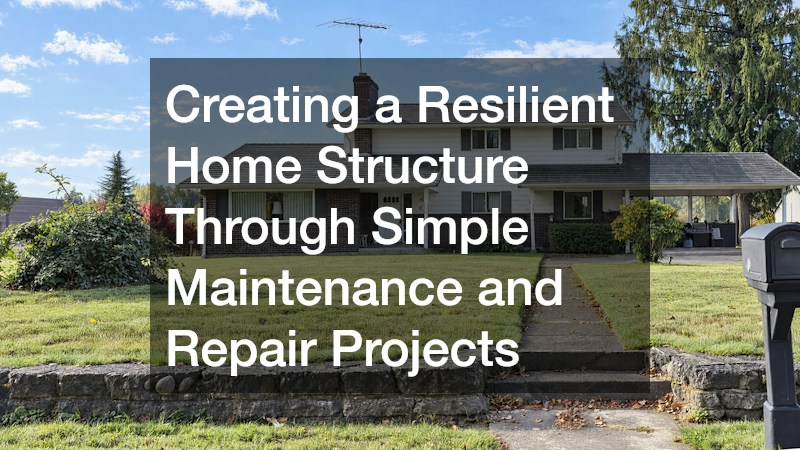
Maintaining a structurally sound, safe, and resilient residential property requires prioritizing the physical health of your home’s load-bearing foundation and underlying soil base. Every structural element of a house—from the roof rafters and exterior load-bearing walls to interior drywall and finished flooring—depends on a level, immobile, and well-drained structural footing. However, sub-surface soils are subject to continuous natural expansion and contraction caused by seasonal moisture swings, freezing frost cycles, expansive clay soils, and poor perimeter water drainage. Over time, shifting soil movement subjects concrete slabs and basement walls to immense hydrostatic pressure and differential settlement, threatening the structural integrity of your entire living space.
Ignoring early warning signs of structural settlement—such as stair-step cracks in exterior brickwork, sticking interior doors, diagonal drywall tears, or bowing basement walls—can lead to severe, cascading property destruction. Water intrusion through foundation hairline cracks saturates sub-slab soils, accelerates internal steel rebar corrosion, degrades floor joists, and creates damp, humid basement environments that harbor toxic mold spores. Taking a proactive approach to structural property maintenance allows homeowners to identify sub-surface soil movement early, preventing minor cosmetic settling from escalating into catastrophic structural failure that destroys home equity.
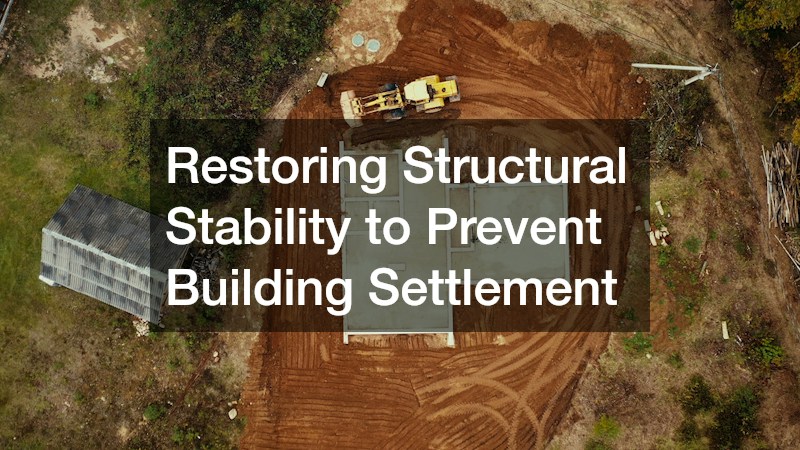
Restoring Structural Stability to Prevent Building Settlement
The load-bearing foundation beneath a residential structure transfers thousands of pounds of dead and live building weight onto underlying soil strata. When soil layers beneath concrete footings become oversaturated from poor gutter drainage or dry out severely during prolonged summer droughts, the earth compresses unevenly, causing sections of the foundation to sink. Differential settlement distorts door frames, fractures window glass, and creates wide gaps along floorboards across living quarters.
Executing timely foundation repair using hydraulic steel push piers or helical anchor systems stabilizes settling footings by transferring building loads down to load-bearing bedrock or dense strata layers deep underground. Specialized installation crews drive heavy-duty steel piers alongside footings, utilizing hydraulic jacks to lift settled concrete structures back toward their original level elevation. Precision mechanical lifting closes wall cracks, re-aligns door frames, and restores structural balance across the entire building envelope.
Taking prompt action to stabilize settling footings stops ongoing structural distortion and preserves your property’s resale value. Steel piering systems provide permanent support that remains completely unaffected by surface soil moisture swings or drought cycles. Professional structural stabilization stops building movement, protecting your home against long-term equity depreciation.
Scheduling Professional Inspections for Wall and Slab Stabilization
Because structural movement occurs slowly below ground level, homeowners often overlook early warning signs of foundation stress, mistaking minor hairline sheetrock cracks for normal house settling. However, as hydrostatic pressure builds behind saturated basement walls, concrete masonry blocks begin to bow inward, creating horizontal cracks that signal imminent wall shear failure.
Booking an evaluation with a certified foundation repairs service enables property owners to receive comprehensive structural audits from experienced field engineers. Technical specialists utilize precision laser levels, wall-monitoring sensors, and soil resistance probes to measure structural floor slope variations and wall deflection angles. Their engineering reports pinpoint exact sub-surface failure mechanisms, whether caused by expansive clay soils, tree root intrusion, or inadequate footing depth.
Partnering with accredited structural evaluation specialists ensures that repair strategies are engineered specifically for your home’s unique soil profile and load characteristics. Early technical intervention allows engineers to recommend low-cost carbon-fiber wall strapping or steel I-beam reinforcements before walls bow beyond structural recovery. Thorough inspections provide clear, actionable repair plans that protect household safety.
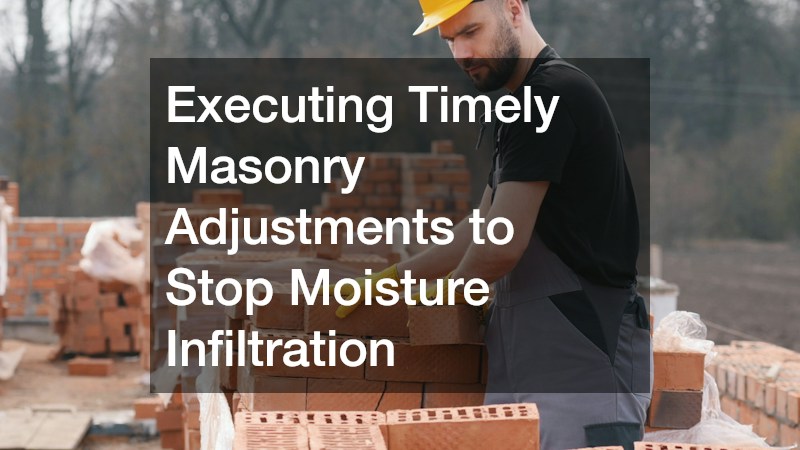
Executing Timely Masonry Adjustments to Stop Moisture Infiltration
Water is the ultimate enemy of residential masonry and concrete structures. When rainwater pools around foundation walls due to clogged gutters or reverse lawn slopes, hydrostatic pressure forces water through hairline concrete pores and mortared joints. Freezing winter temperatures cause trapped water to expand, widening cracks and causing concrete surfaces to spall, chip, and crumble over time.
Arranging for professional foundation repairs at the first sign of surface cracking, efflorescence staining, or dampness stops water migration before moisture reaches internal wall studs or living space floorboards. Specialized technicians inject high-pressure polyurethane foams or epoxy resins deep into concrete wall cracks, expanding to fill hidden voids completely and creating an impenetrable, flexible waterproof seal. External drainage membranes and French drain installations direct groundwater away from footings cleanly.
Executing timely masonry adjustments prevents hidden wood rot, eliminates toxic basement mold spores, and keeps sub-surface walls dry and structurally sound. Sealing wall fractures stops radon gas migration from surrounding soils into lower living areas. Proactive crack repair habits preserve structural concrete strength and maintain a healthy, dry indoor environment.
Coordinating Comprehensive Sub-Surface Stabilization Across Property Grounds
Maintaining a completely level and stable home footprint often requires looking beyond the main perimeter wall footings. Sinking concrete driveways, uneven front entry steps, fractured garage slabs, and tilting patio surfaces alter surface water runoff patterns, directing heavy rainwater runoff straight against main foundation walls.
Contracting comprehensive foundation repair services allows homeowners to resolve both deep footing settlement and surface slab displacement through unified engineering solutions. Professional service providers combine deep steel piering with sub-surface poly-foam lifting, leveling sunken concrete slabs and restoring correct surface drainage slopes away from home walls. Integrated water management systems—including sump pump installations, exterior catch basins, and buried downspout extensions—keep surrounding soils dry and stable.
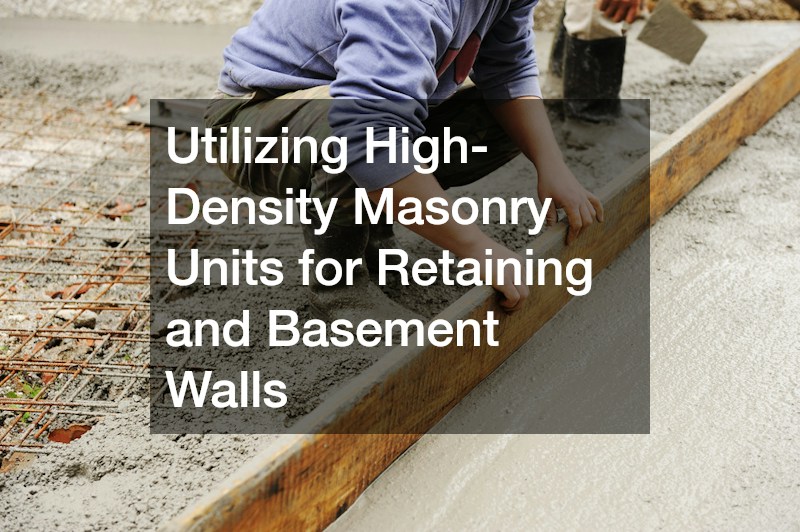
Utilizing High-Density Masonry Units for Retaining and Basement Walls
Concrete masonry units provide versatile, high-strength structural solutions for constructing load-bearing basement walls, foundation stem walls, and exterior earth-retaining structures. However, hollow masonry walls must be engineered with internal vertical rebar reinforcement and solid concrete grout fills to withstand heavy lateral soil pressures and hydrostatic water loads without bowing or cracking.
Utilizing high-density concrete blocks laid by experienced masons ensures that structural retaining walls and basement enclosures achieve maximum compressive strength and high fire resistance. Qualified masons install continuous horizontal steel joint reinforcement every few courses, setting blocks with tight, full-mortar beds that seal out water intrusion. Filling hollow block cores with high-strength concrete grout transforms individual masonry units into a solid, reinforced concrete wall matrix.
Deploying Specialized Liquid Placement Equipment for Hard-to-Reach Areas
Pouring structural concrete footings, basement floor slabs, or backyard retaining wall bases requires delivering heavy, freshly mixed wet concrete precisely where needed before initial setting occurs. However, homes built on sloped terrain, properties with narrow side-yard access, or indoor basement repair projects make driving heavy 30-ton concrete mixer trucks directly to job sites physically impossible or destructive to lawns.
Deploying specialized concrete pumping services solves site access challenges by transferring liquid concrete through flexible, high-pressure hose lines over house roofs, around tight yard corners, or deep into basement interiors. Boom pumps and ground line pumps deliver steady, high-volume concrete flows directly into wall forms or sub-slab excavations without requiring manual wheelbarrow trips across soft lawns. Continuous, rapid liquid placement prevents cold joints from forming, ensuring uniform structural strength throughout the concrete pour.
Utilizing mechanical pumping systems accelerates construction timelines, lowers labor costs, and protects landscape turf and driveway paving from heavy truck damage. Precise hose placement ensures that wet concrete completely fills deep footing trenches and dense rebar cages without leaving air pockets or honeycombing voids. Specialized pumping execution guarantees superior structural concrete density.
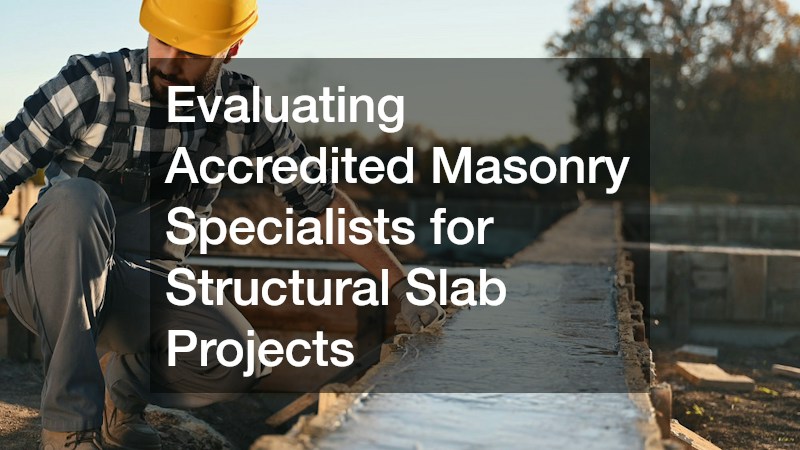
Evaluating Accredited Masonry Specialists for Structural Slab Projects
Executing a successful concrete project—whether pouring a new reinforced garage slab, building a structural retaining wall, or replacing settled foundation footings—demands precise material proportioning, excavation depth control, sub-base compaction, and steel rebar grid placement. Inexperienced handymen or low-bid contractors who skip sub-base gravel compaction or fail to elevate steel rebar off the ground leave property owners with thin, unreinforced concrete that cracks, settles, and crumbles within just a few seasons.
Evaluating qualified concrete contractors enables property owners to select licensed, fully insured trade specialists who strictly follow ACI (American Concrete Institute) placement standards. Master concrete craftsmen prepare deep aggregate sub-bases, install vapor barriers beneath interior slabs, and set rigid formwork braced against lateral liquid concrete pressures. Their technical expertise guarantees that expansion joints are cut at precise intervals to control natural drying shrinkage without random surface cracking.
Partnering with accredited concrete specialists protects your financial investment with written material and labor warranties. Certified contractors calibrate concrete mix formulations to match local freeze-thaw requirements, specifying air-entrainment additives that prevent surface scaling and spalling during winter months. Thorough contractor selection guarantees high-strength, beautiful concrete surfaces built for long-term service.
Hiring Precision Sawing Enterprises for Utility and Drainage Access
Modifying existing concrete slabs—such as installing an interior sub-slab perimeter drain tile system, adding a basement bathroom drain line, or creating a new crawlspace access hatch—requires cutting through thick, steel-reinforced concrete floor slabs cleanly. Utilizing manual jackhammers without initial perimeter saw-cutting creates jagged, uncontrolled fractures that shatter surrounding concrete slabs and damage underlying vapor barriers.
Hiring a professional concrete cutting company ensures that structural slabs and basement walls are sliced with surgical precision using heavy-duty, diamond-bladed walk-behind saws and hydraulic hand saws. Precision diamond saw-cutting creates clean, straight perimeter score lines through reinforced concrete, allowing removal crews to break out targeted slab sections without sending dangerous impact shockwaves through neighboring walls or footings. Integrated water-vacuum systems suppress airborne silica dust completely, keeping living spaces clean during interior demolition.
Utilizing specialized diamond saw-cutting equipment protects structural slab integrity while creating smooth vertical edges for clean concrete patching later. Clean saw cuts ensure that new concrete trench patches bond tightly to existing slabs, preventing water seepage along seam lines. Professional cutting execution delivers safe, efficient utility access through solid concrete structures.
Consulting Community Craftsmen for Custom Flatwork and Patio Installs
Beyond foundational safety, high-quality exterior concrete flatwork—including stamped patio terraces, smooth decorative driveways, brushed pool decks, and custom entry walkways—enhances a home’s outdoor living space and boosts curb appeal. Exterior flatwork must be sloped correctly away from home walls to ensure that rainwater sheds efficiently into lawn drainage zones.
Consulting a skilled local concrete contractor enables homeowners to design custom flatwork layouts tailored specifically to their yard contours and home style. Local trade craftsmen guide material selection, offering brushed finishes, exposed aggregate textures, or stamped patterns that replicate natural slate, brick, or stone surfaces. Their field expertise ensures that edge thickened footings and control joints are placed logically to handle heavy vehicular or foot traffic without structural cracking.
Relying on community-based building specialists guarantees dedicated customer service, transparent communication, and fast job site mobilization. Local contractors understand regional sub-grade soil conditions, setting thick aggregate bases that resist frost heave during harsh winter freezes. Custom craftsmanship transforms plain concrete flatwork into an attractive architectural feature.
Partnering with Top Regional Material Suppliers for High-Grade Pours
The long-term durability and compressive strength of any poured concrete structure depend directly on the quality, purity, and exact proportioning of sand, gravel, Portland cement, and water combined at the batch plant. Low-grade concrete mixes formulated with improper water-cement ratios or low-strength aggregate materials produce weak, porous concrete that absorbs water readily, leading to rapid internal rebar corrosion and surface crumbling.
Partnering with an established local concrete company ensures that your construction project receives factory-mixed concrete delivered at precise compressive strength ratings (such as 3,500 to 5,000 PSI) tailored to your project’s specific load requirements. Top-tier regional batch plants utilize computerized proportioning systems, incorporating chemical admixtures like plasticizers for high workability and air-entrained agents for superior freeze-thaw resistance. Direct mixer truck delivery guarantees that wet concrete arrives on-site at optimal temperature and slump consistency for rapid placement.
Creating a safe, resilient, and structurally sound home requires organizing sub-surface soil management, foundation stabilization, precision concrete cutting, high-strength masonry construction, and professional trade care into a single, cohesive property protection plan. Protecting your home’s structural foundation prevents subtle soil settlement from turning into catastrophic building failure, preserving your property’s structural health and market equity over time. Combining deep steel push piers with waterproof crack injection, proper site grading, and high-density concrete flatwork creates a stable, well-drained footprint that protects your living space from water damage and structural distortion.
Taking a disciplined, forward-thinking approach to structural home repairs shields your financial equity, eliminates unexpected emergency restoration expenses, and elevates your home’s overall safety. Strategic investment in high-yield structural upgrades, premium concrete materials, and expert trade craftsmanship transforms your property into an indestructible, comfortable sanctuary that delivers lasting security, pride of ownership, and complete peace of mind through every season of the year.